
What types of retaining walls work in Florida?
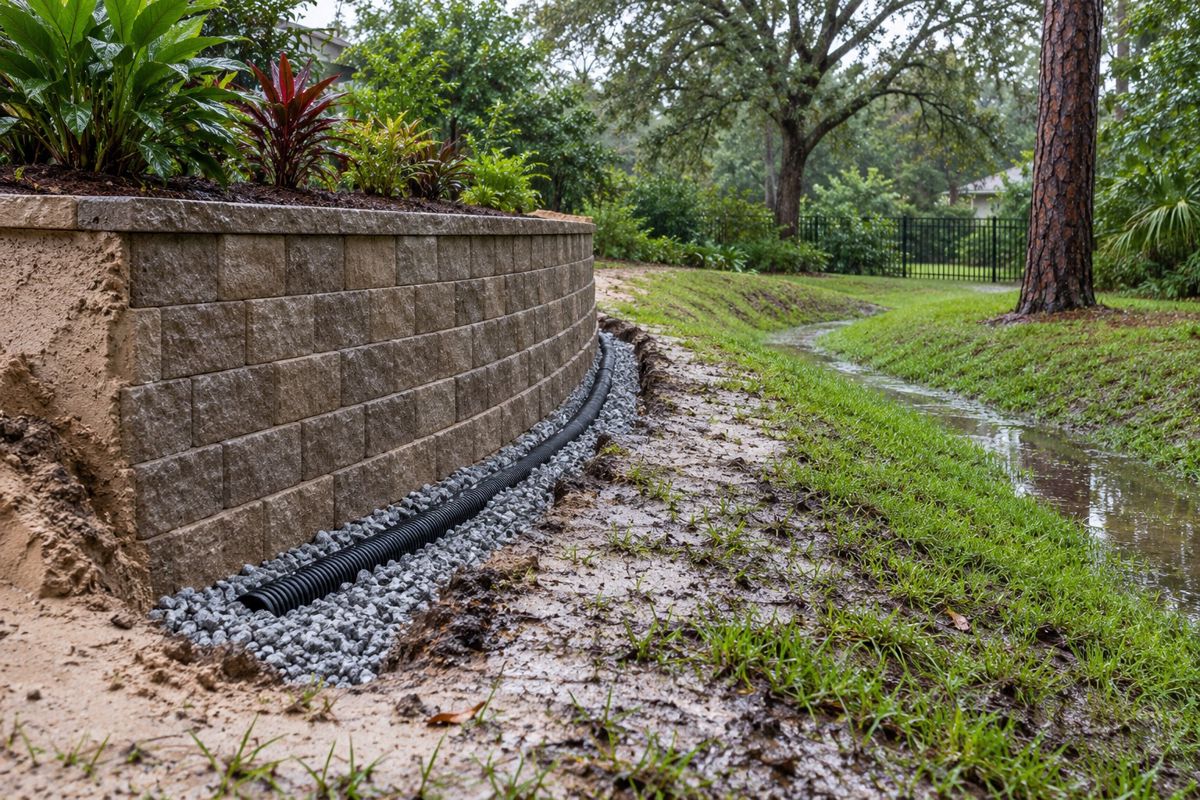
- Segmental block. Interlocking concrete units stacked on a compacted base with gravel behind. This is the common choice for yards, and it handles settling better than a rigid wall.
- Natural stone. Looks good and suits planted slopes, but needs skilled stacking.
- Poured concrete or stucco-finished block. Used where height or strength is a concern, often with an engineer's drawings.
- Timber. Cheap upfront, but moisture and termites shorten its life in Florida, so we steer owners toward masonry for anything long term.
Whatever the material, the hidden parts do the work. These include a compacted base, free-draining gravel behind the wall, a drain pipe or weep openings so water does not build up, and in taller walls a geogrid layer that ties the wall to the soil. A wall without drainage behind it can bulge or lean after one hard summer storm.