
Skip to content
  • Free written quotes
  • Local crews
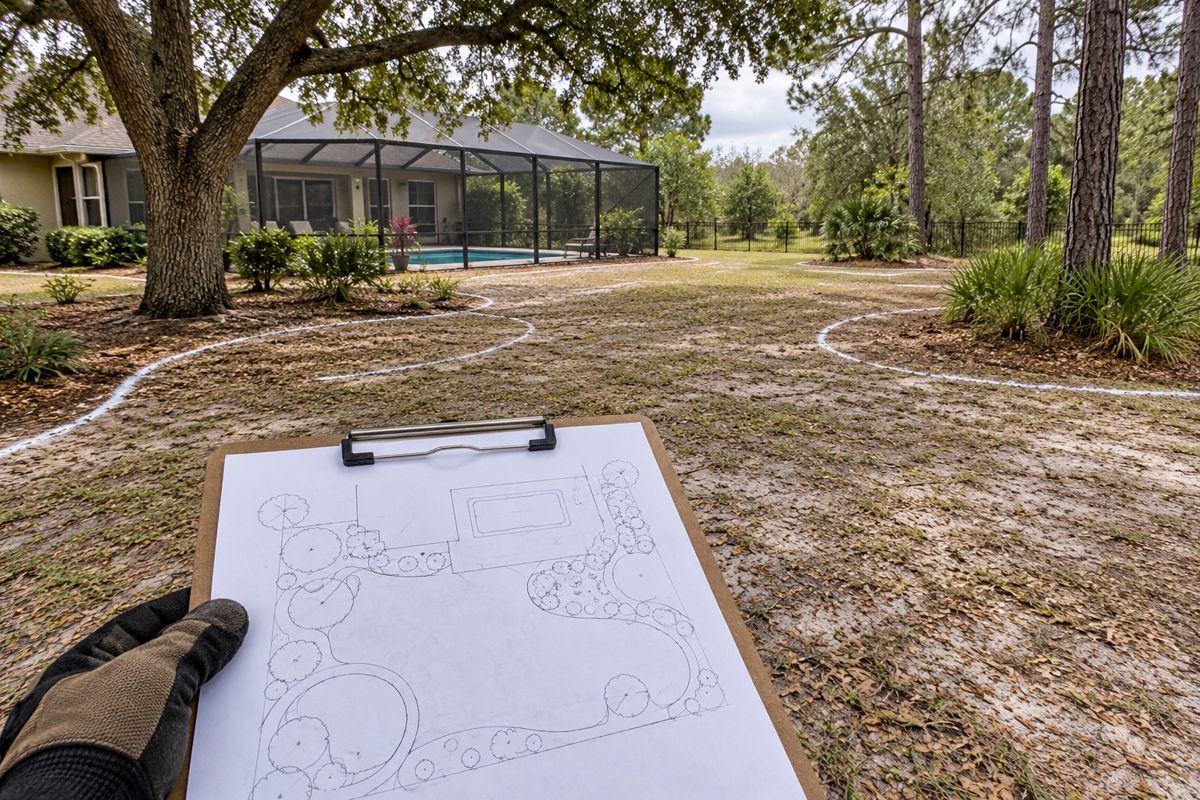
Spray-painted bed outlines on a sandy Florida back yard under oak trees

Landscape design in Spring Hill

Landscape design in Spring Hill for sandy soil and shade

A clear plan for beds, plants, paths and water, then the work to build it. Start with one area or redo the whole yard.

  • Plant lists chosen for sand, heat and brief cold snaps
  • Phased plans you can build over time
  • HOA-ready sketches and material notes

Step 1 of 3

What do you need?

What is included in landscape design and a full yard overhaul?

Landscape design is the plan that comes before any digging. It covers where beds go, how paths flow, which trees stay, where shade falls and how rain moves across the lot. A full yard overhaul takes that plan and rebuilds the whole space, often removing old turf, tired shrubs and broken edging in one go.

For a typical landscape design in Spring Hill, the work may include:

  • A site walk and a measured sketch of the lot.
  • Bed shapes, plant lists and mulch choices.
  • Placement for patios, walkways and lighting, tied to hardscape work when needed.
  • Grading notes so rain runs away from the house.
  • A phased plan, so you can build one area now and the next later.

The finished plan is also what you hand to an HOA committee, which tends to move faster when it can see a drawing and a plant list.

Which plants do well in Spring Hill sandy soil?

Sand drains quickly, so plants that like steady moisture struggle between rains. The better picks are tough, Florida-friendly choices that handle heat, short dry spells and a low-nutrient soil. The University of Florida's Florida-Friendly Landscaping program is a good public guide to what suits our area.

Plants that tend to do well

  • Coontie, saw palmetto and muhly grass for low, tough texture.
  • Firebush, beautyberry and Simpson's stopper for flowers and berries that wildlife like.
  • Live oak, sabal palm and crape myrtle where there is room for a tree.
  • Dwarf yaupon holly and viburnum for hedges and screens.

Spring Hill sits near the line where frost can still hurt tender plants such as ixora and some hibiscus. We keep those close to walls or in sheltered spots, and we do not rely on them for the main structure of a bed.

What problems do Spring Hill yards usually have?

Most calls start with one of a few problems.

  • Bare sandy patches under oaks and pines where grass will not hold. A shade-friendly bed with mulch often works better than forcing more turf.
  • Washed-out beds where summer downpours carry mulch and sand into the driveway.
  • Overgrown foundation shrubs that hide windows and hold moisture against walls.
  • Dead or thin lawns from chinch bugs, drought stress or too much shade. In some yards the answer is new sod, and in others it is a smaller lawn.
  • Plants that die the first summer because water was never set up for them.

Many yards also hold old, unplanned planting from earlier owners. Part of a design visit is deciding what is worth keeping and what should go.

We do not quote prices on a web page, because every yard is different. These are the main things that move the number:

  • The size of the area and how much old material must be removed.
  • Plant sizes. A one-gallon shrub costs far less than a field-grown tree or a mature palm.
  • How much soil, mulch and compost is needed to build up the sand.
  • Hard surfaces, lighting and any edging or walls in the plan.
  • Access. A narrow gate or a pool cage can mean more hand work.
  • Whether the irrigation system needs changes to match the new beds.

Ask every contractor for a written scope that lists plant counts, sizes and materials. That makes quotes easy to compare. It is also wise to ask to see a contractor's license and proof of insurance before you sign.

How long does it take, and what should you expect on the day?

A small bed refresh can take a day or two. A full yard overhaul usually runs several days to a few weeks, depending on size, material delivery and weather. Afternoon storms in summer can stop work, and very wet ground slows heavy equipment.

On work days, expect a delivery of mulch, soil or plants, then crews marking beds with paint or hose, clearing, planting and finishing with mulch. Please keep pets inside and move cars off the driveway if asked. Underground utility lines should be located before serious digging, and Sunshine 811 is the normal way to do that in Florida.

When should you call?

Call when a yard no longer matches how you live, before you buy plants in bulk, or when an HOA letter says something has to change. Early is better, because approvals can take time. Not sure which service you need? Start from our Spring Hill landscaping overview.

What you can expect

  1. Free written quotes

  2. Local crews

  3. Reliable scheduling

  4. Tidy job sites

Questions about landscaping in Spring Hill

Do I need a full design, or can you just plant a few beds?

Either works. A single bed can be planned in one visit. A full design makes sense when you want to change the whole yard or when several projects will happen over time. Drawing the big picture first stops you from planting in a spot where a patio, path or sprinkler line will need to go later.

Will my HOA need to approve a new landscape plan?

Many communities do review plant changes, borders, trees and hard surfaces. Ask for the rules and the form, then send a simple sketch and plant list. Review times vary, and some committees meet only monthly. Do not order plants or book a start date until you know the answer.

What is Florida-friendly landscaping?

It is a set of practices from the University of Florida that favors the right plant in the right place, less fertilizer, smart watering and mulch. It does not mean a yard of rocks. A Florida-friendly yard can look full and green while using less water and fewer chemicals than a lawn-heavy design.

Can you work around the oak trees in my yard?

Usually yes. Mature oaks have shallow roots that dislike deep fill soil and heavy digging, so we keep grade changes small near the trunk and use mulch, ground cover or shade plants underneath. If a tree looks sick or leans, ask a certified arborist to look at it before you build near it.

How do you plan for summer storms and heat?

We choose plants that handle heat and short dry spells, set bed grades so downpours drain away from the house, and add mulch to protect the sand. We also plan watering in from the start, since new plants need steady water for the first few months even when they are drought tolerant later on.

How it works

  1. Tell us about the yard

    Size, goals and any photos.

  2. Site visit and quote

    We walk the property and put the price in writing.

  3. We do the work

    Scheduled crew, cleanup included.

Request landscape design

Tell us what you need and we call you back.

Step 1 of 3

What do you need?

No obligation.

Ready when you are. Call now or request a quote online.

Call for a free quote
Takes about 30 seconds. Get my free landscaping quote