
Skip to content
  • Free written quotes
  • Local crews
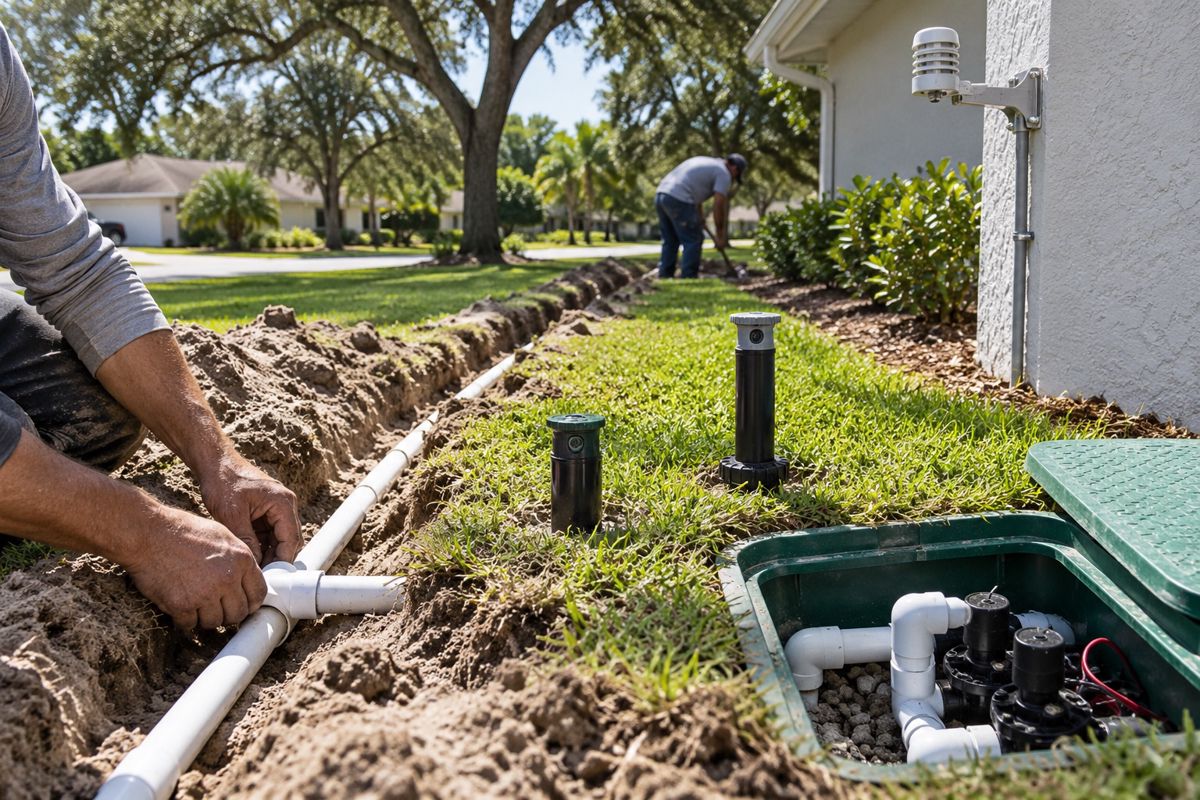
Trench with PVC pipe and sprinkler heads in a sandy Florida lawn

Irrigation in Spring Hill

Sprinkler system installation in Spring Hill for sandy lots

Zones planned for your lawn, beds and water source, with the rain sensor and settings Florida rules expect.

  • Layouts for county water, wells or reclaimed water
  • Separate zones for lawn, beds and shade
  • Controller set up around local watering rules

Step 1 of 3

What do you need?

What does sprinkler system installation involve?

A sprinkler system is a network of buried pipe, valves and heads, run by a controller. Sprinkler system installation in Spring Hill starts with a look at your lot and your water source, then a zone plan. Lawn areas, shrub beds and shaded corners each get their own zone, because they need different amounts of water.

The usual steps are:

  1. Check the water supply, whether it is county water, a private well or reclaimed water.
  2. Draw zones so heads overlap and cover the lawn evenly.
  3. Trench and lay pipe, then install valves and a backflow preventer if the supply needs one.
  4. Place rotor or spray heads for turf, and drip lines for beds and shrubs.
  5. Add a controller and a rain sensor, test every zone, and adjust the heads.

If you are putting in new grass, add the system first. Our sod installation crew can coordinate the two.

How do water rules and wells affect your design?

Florida law requires a rain sensor on automatic irrigation systems, so it is part of any proper install. Beyond that, the Southwest Florida Water Management District and Hernando County set which days and hours you may water. Midday watering is generally limited, and the number of days per week can change with drought conditions. Check current rules before you set the schedule.

Many Spring Hill homes water from a shallow irrigation well rather than the county line. A well can save on the water bill, but it needs a pump sized to the zones, and some wells carry iron that stains driveways, walls and pavers. We can aim heads away from hard surfaces and plan around the problem. If you have reclaimed water, rules on use differ from potable water, so ask the utility.

Sandy soil also affects the schedule. Water passes through quickly, so shorter, well-timed cycles often work better than one long soak that runs off.

What problems do Spring Hill sprinklers usually have?

  • Broken heads from mowers, edgers and trucks parking on lawns.
  • Clogged nozzles from sand, rust or fine debris, especially on well systems.
  • Overspray onto roads, pool cages, walls and pavers, which wastes water and leaves stains.
  • Poor coverage, with brown and green stripes in the same lawn.
  • Tree roots and storm damage, since lightning can fry controllers and valves.
  • A schedule that ignores the rules or the season, so beds drown in the wet months and burn in spring.

Many of these are fixed with new heads, a zone change or a better controller. Sometimes the plan itself is wrong, such as a bed of thirsty plants sharing a zone with turf. A matching landscape design prevents that kind of mismatch.

Quotes vary because every lot is different. The main factors are:

  • The size of the lawn and beds, which sets the number of zones and heads.
  • Your water source, including pump size for a well or a new connection to county water.
  • The type of heads, and whether beds use drip lines instead of sprays.
  • Controller type. A basic timer costs less than a smart controller that adjusts to the weather.
  • Trenching conditions, such as roots, concrete, pavers and pool cages.
  • Permits, backflow devices and any required inspections.
  • Whether you are adding to a system or starting from scratch.

Ask for the number of zones, head types and controller model in writing. Ask to see a contractor's license and insurance, and ask who services the system if a zone fails. A well pump or electrical work may need a separate qualified trade.

How long does it take, what should you expect, and when should you call?

Most home systems take a day or two to install. Larger lots, well pumps and heavy trenching take longer. Rain can pause work, and wet sand makes trenches collapse.

What to expect on the day

Crews flag the heads, trench the lines and test each zone before the trenches close. You will see some disturbed turf along the pipe runs, which usually settles and greens back up with water. Please move vehicles and keep pets in. Water may be shut off for a short time.

When should you call?

Call when whole zones fail, your water bill jumps, parts of the lawn stay brown while others flood, or you are about to lay new turf. Not sure what else the yard needs? Our Spring Hill landscaping home page lists everything we do.

Free written quotes Local crews Reliable scheduling Tidy job sites

Questions about landscaping in Spring Hill

Does Florida require a rain sensor on my sprinkler system?

Yes. State law requires automatic irrigation systems to have a working rain sensor or similar device that shuts the system off when it rains. They can fail or get bypassed over time, so test it. If yours is old or broken, replacing it is a small job that keeps you in line with the rule.

How often can I water my lawn in Spring Hill?

The Southwest Florida Water Management District and Hernando County set the allowed days and times, and these can change with drought. New sod and plants often get a short exception. Look up the current schedule on the district or county website before you program the controller.

Is a well or county water better for irrigation?

A well avoids using treated drinking water on grass, and often lowers costs. It also needs a pump, upkeep and care about iron staining. County water is simpler but can cost more to use. Either can work. Your lot, water pressure and budget decide.

Why are some parts of my lawn brown while others are soaked?

That usually points to uneven coverage, clogged or tilted heads, low pressure or zones that mix different plants. A zone check shows where heads miss or overlap. Many problems are fixed with nozzle swaps and adjustments, and no one has to dig up the whole yard.

Should I use drip irrigation for my beds?

Drip lines put water at the roots and waste less to wind and evaporation, which is useful on sandy soil and under oaks. They need their own zone and a filter, and they should be checked now and then for clogs or chewed lines. Many yards use sprays for turf and drip for beds.

How it works

  1. Tell us about the yard

    Size, goals and any photos.

  2. Site visit and quote

    We walk the property and put the price in writing.

  3. We do the work

    Scheduled crew, cleanup included.

Request irrigation systems

Tell us what you need and we call you back.

Step 1 of 3

What do you need?

No obligation.

Ready when you are Call now or request a quote online. Call for a free quote Get my free landscaping quote (352) 555-0149

Takes about 30 seconds. Get my free landscaping quote