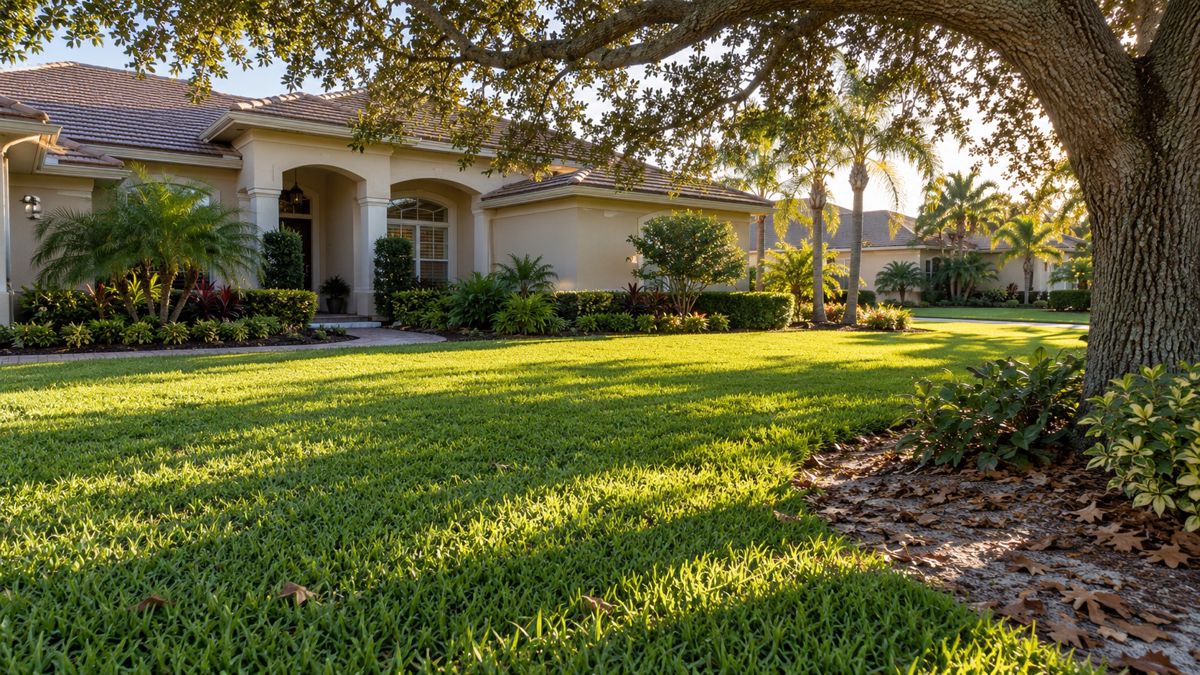
For most Spring Hill homes, St. Augustine is the safest choice, and Bahia is the tough, lower-cost option for sunny, sandy yards. Zoysia and Centipede suit certain owners, but each has trade-offs. The right grass depends on three things: how much sun your lawn gets, how much work you want to do, and what your HOA allows. This guide walks through each grass and how to lay it so it lives.
What makes Spring Hill a tricky place to grow grass?
Spring Hill sits in Hernando County on deep, pale sand. That soil drains quickly and holds very little food or water. A lawn can look fine after a storm and be thirsty two days later. Summers are hot and humid, with a rainy season from about June to September. Winters are mild, but a few frosty nights can turn warm-season grass brown.
Add the live oaks, laurel oaks and pines that fill so many lots, and you get a yard with sunny patches and heavy shade side by side. Chinch bugs, nematodes in sandy soil and fungus after long wet spells are also common. No grass handles all of this equally well, so the goal is to match the grass to each yard.
Is St. Augustine the right grass for most Spring Hill lawns?
St. Augustine is the most common home lawn in Florida, and Spring Hill is no exception. It grows thick, crowds out many weeds and handles heat well. It is also the most shade-tolerant of the main warm-season grasses, which matters under oaks.
Varieties to know
- Floratam is a vigorous, sun-loving type. It does well in open yards and is less happy in shade or in cold snaps.
- Palmetto and Seville are softer, finer types that tolerate more shade.
The trade-offs are real. St. Augustine uses more water than Bahia, it is a favorite of chinch bugs, and it is sold only as sod, so you pay more at the start. It also hates being cut short. Mow it on a high setting and it will repay you.
When does Bahia make more sense?
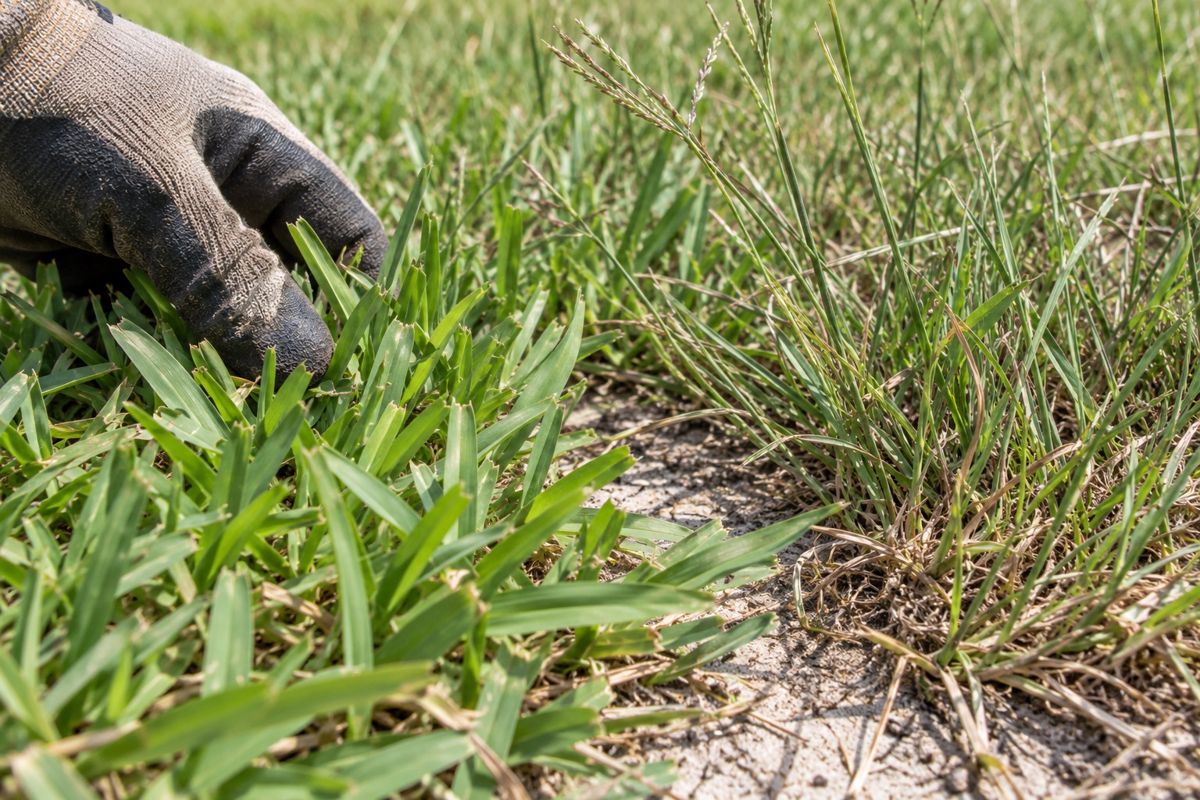
Bahia is a coarser, tougher grass that puts up with poor sandy soil and dry spells better than most. It is often used on larger lots, acreage and low-maintenance yards. Its roots go deep, and it can look reasonable with little feeding.
The downsides are looks and upkeep of a different kind. Bahia leaves a lot of seed stalks in summer, and it needs frequent mowing to keep them down. Mole crickets can chew through it. It does not like heavy shade and it will not give you the carpet look of St. Augustine or Zoysia. For a sunny, big lot where budget and low input matter more than looks, it is a reasonable pick.
What about Zoysia and Centipede?
Zoysia makes a dense, fine-bladed lawn that feels soft underfoot. It handles traffic and some shade, and it can look excellent when well kept. It grows slowly, so it takes longer to fill in after installation, and it needs more careful mowing and care than the others. It is also usually pricier.
Centipede is a low-input grass that likes the acidic, sandy soil common around here. It stays short and does not need much feeding. It is also touchy. Heavy foot traffic, too much fertilizer and poor drainage can hurt it, and it does not suit shade or very wet spots. It works best for owners who want a lawn they rarely touch.
Bermuda also grows in Florida, but it wants full sun and constant care, so it is more common on sports fields than on home yards in shaded subdivisions.
How do sun, shade and soil change the answer?
Start with a simple sun check. Watch the yard on a clear day and note how many hours each area gets direct light.
- Six or more hours of sun: Floratam St. Augustine, Bahia, Zoysia and Centipede can all work.
- Four to six hours: Palmetto or Seville St. Augustine is the safer pick.
- Less than four hours: Turf will struggle. Consider mulch, ground cover or shade plants instead.
Soil matters too. Sand with no organic matter will always be hard work. Mixing compost or topsoil into the top few inches before laying sod helps roots take hold and holds water longer. A soil test through the UF/IFAS Hernando County Extension office can tell you the pH and what the lawn is missing.
Also check your HOA rules. Some communities name an approved grass or ban certain types. Ask before you order.
When should you lay sod, and how do you keep it alive?
Sod goes in most months, but the warm season, from spring to early fall, gives the fastest rooting. Winter installs are fine if you accept that the lawn will stay slow until warm weather returns.
- Clear the old lawn and weeds. Do not lay sod over them.
- Grade the area so water does not pond or run toward the house.
- Improve the soil with compost where the sand is thin.
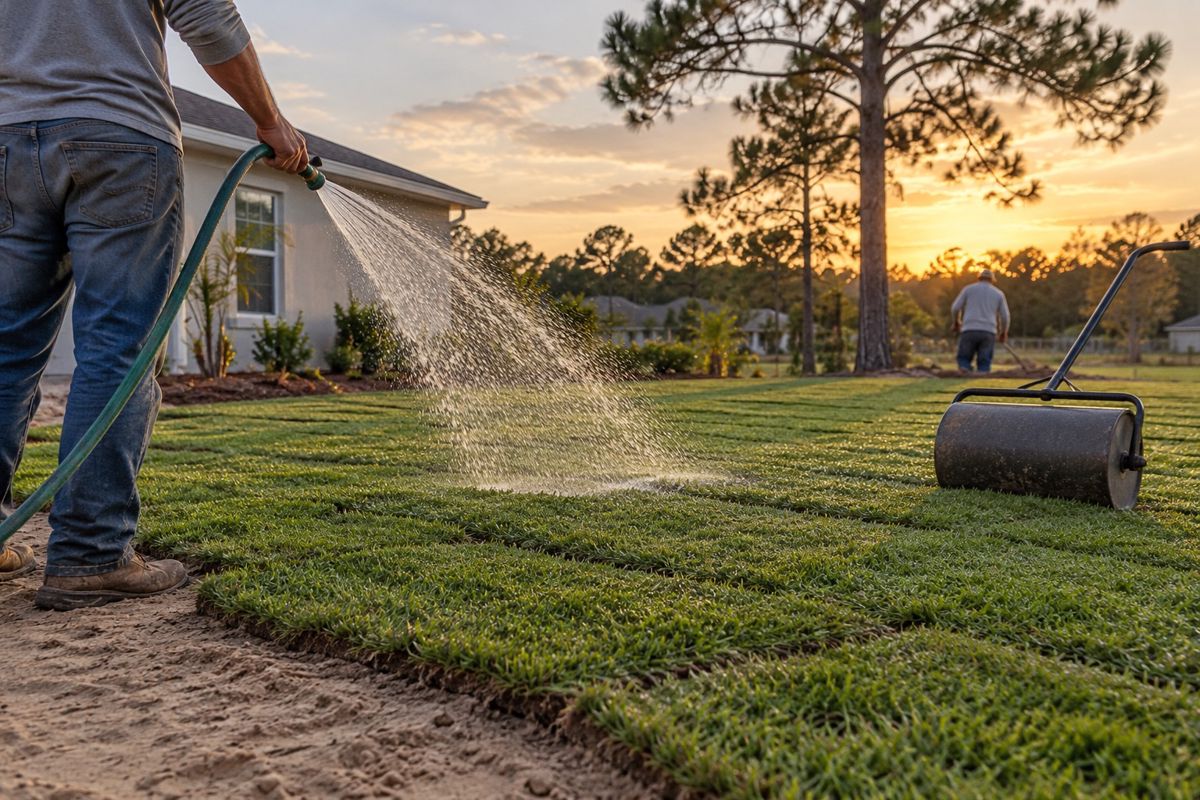
- Lay the sod with tight, staggered seams, and roll it for good contact.
- Water right away and keep it moist for the first couple of weeks.
- Hold off mowing until the roots grip, then keep the blade high.
Watering rules apply. The Southwest Florida Water Management District and Hernando County set the days and hours you may water, and new sod often has a short window of extra watering. Rules change with drought, so look up the current schedule. Many Florida counties also limit fertilizer in the summer rainy season, so check the local rule before you feed.
If you are adding sprinklers, do it before the sod goes down. Digging trenches through a new lawn is a headache that is easy to avoid.
Which grass should you pick, and who can help?
If you want one answer, the safe one for most Spring Hill yards is St. Augustine, using a shade-tolerant type under trees. Bahia fits sunny, large, low-effort lots. Zoysia and Centipede suit owners who know what they are signing up for.
A good installer will look at your sun, soil and drainage before suggesting a grass, and will put the variety, the area and the prep work in writing. To see what a lawn replacement involves from start to finish, read about our sod installation in Spring Hill. If the lawn problem is really a drainage or water problem, our sprinkler and irrigation page may be the better place to start.